
What Happens If You Don't Replace a Missing Tooth?
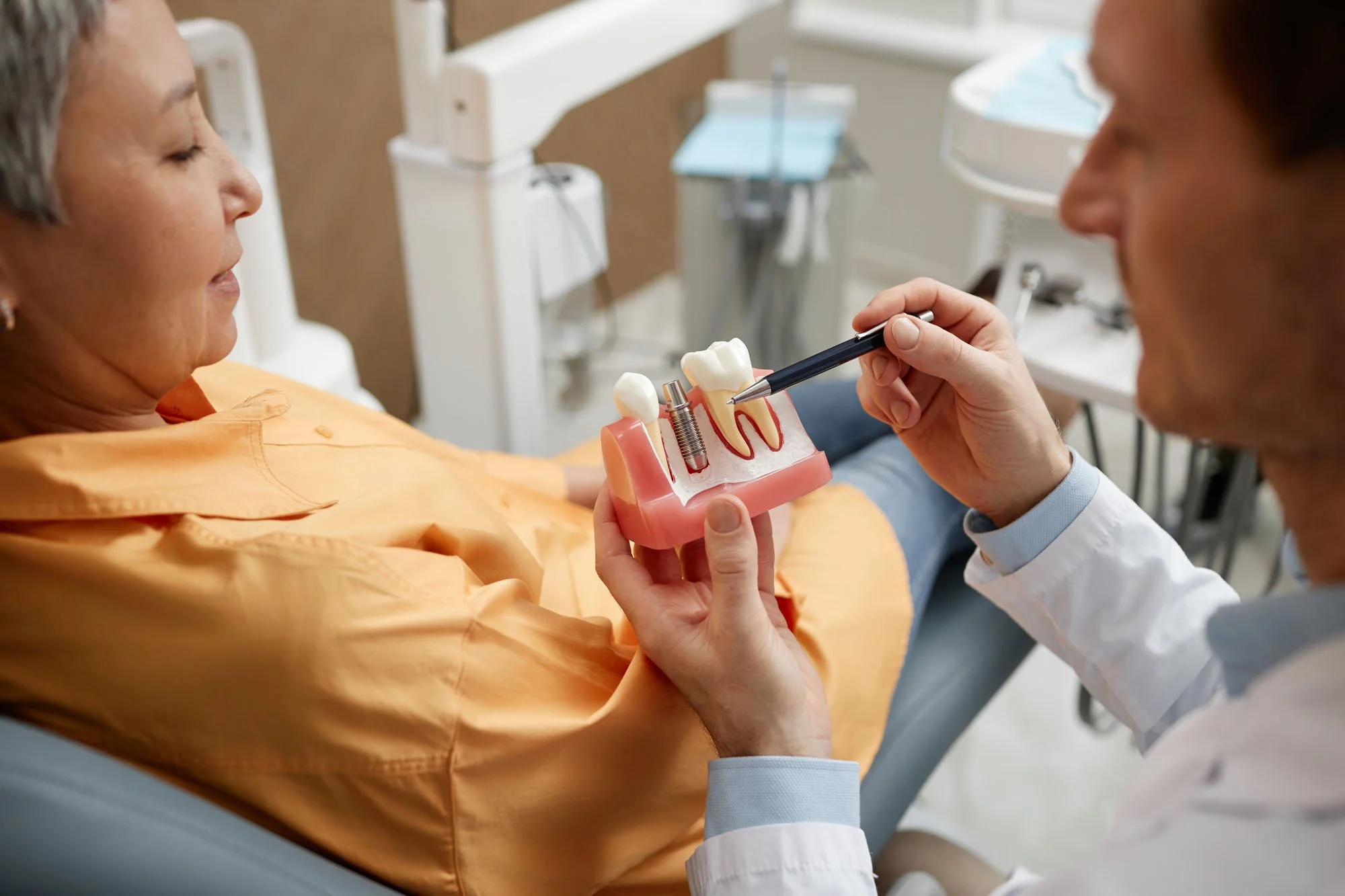
Losing a tooth is more common than many people realise. Whether it's due to trauma, decay or gum disease, many people delay replacing a missing tooth because it isn't causing immediate pain.
However, even a single missing tooth can lead to significant changes in your mouth over time. The longer the space remains untreated, the greater the risk of complications affecting your oral health, appearance and overall quality of life.
Here's what can happen if a missing tooth isn't replaced.
Bone Loss Begins Immediately
One of the biggest consequences of losing a tooth is the gradual loss of jawbone.
Healthy tooth roots stimulate the surrounding bone every time you chew. Once a tooth is removed, that stimulation disappears, causing the bone to slowly shrink in a natural process known as bone resorption.
Research shows that the greatest amount of bone loss occurs during the first year after tooth extraction, although the process continues over time.
As bone volume decreases, replacing the tooth can become more complex and may require additional procedures such as bone grafting.
Neighbouring Teeth Begin to Shift
Your teeth work together to maintain proper alignment.
When a gap is left untreated, the surrounding teeth often begin to drift into the empty space. The opposing tooth may also over-erupt because it no longer has a tooth to bite against.
This movement can result in:
Crooked teeth
Bite changes
Food trapping
Difficulty cleaning between teeth
Increased risk of decay and gum disease
The longer the tooth is missing, the more these changes can progress.
Chewing Becomes Less Efficient
Even losing a single tooth can affect the way you chew.
Many people unconsciously begin chewing on the opposite side of their mouth, placing additional stress on those teeth.
Over time this may lead to:
Uneven tooth wear
Increased pressure on certain teeth
Jaw muscle fatigue
Reduced chewing efficiency
Replacing the missing tooth helps restore balanced function.
Changes to Your Bite
As neighbouring teeth shift and bone changes occur, your bite may gradually become less stable.
Some people develop:
Difficulty biting evenly
Jaw discomfort
Increased tooth wear
Changes in the way the upper and lower teeth meet
These changes often occur slowly, making them difficult to notice until they become more significant.
Changes in Facial Appearance
The jawbone helps support the soft tissues of the face.
When bone is lost following tooth extraction, the face may gradually lose some of its natural support, particularly when multiple teeth are missing.
This can contribute to:
Sunken facial appearance
Thinner lips
Increased facial wrinkles
Premature ageing around the mouth
Maintaining healthy bone volume is one of the reasons dental implants are often recommended following tooth loss.
Speech May Be Affected
Depending on the location of the missing tooth, speech may also change.
Front teeth play an important role in producing certain sounds. Missing these teeth can sometimes affect pronunciation and reduce confidence when speaking.
Replacing missing teeth often restores both speech and confidence.
It Can Affect Your Confidence
Many patients say the emotional impact of tooth loss is just as significant as the physical effects.
People may avoid:
Smiling
Speaking in public
Eating with others
Having photographs taken
Replacing missing teeth can improve confidence and overall quality of life.
What Are the Treatment Options?
Several treatment options are available depending on your individual circumstances.
Dental Implants
Dental implants replace both the tooth root and the visible tooth, helping preserve jawbone while restoring appearance and function.
For many patients, implants provide the closest replacement to a natural tooth.
Dental Bridges
A bridge replaces the missing tooth by attaching to neighbouring teeth.
While bridges are an effective option for some patients, they do not prevent bone loss beneath the missing tooth because the root is not replaced.
Dentures
Partial dentures remain a suitable solution for replacing multiple missing teeth.
Modern dentures are lighter and more comfortable than older designs, although they do not provide the same level of stability as dental implants.
Your oral surgeon can explain which option is most appropriate for your situation.
Is It Ever Too Late to Replace a Missing Tooth?
Not necessarily.
Even if a tooth has been missing for many years, treatment may still be possible.
Some patients require additional procedures such as bone grafting or sinus lift surgery before dental implants can be placed.
A consultation with an oral surgeon is the best way to determine your options.
When Should You See an Oral Surgeon in Wagga Wagga?
You should arrange an assessment if you:
Have recently lost a tooth.
Have been missing a tooth for several years.
Want a permanent alternative to a denture or bridge.
Have noticed neighbouring teeth shifting.
Have difficulty chewing comfortably.
Early assessment often provides more treatment options and may reduce the need for additional procedures in the future.
Book a Consultation at Wagga IV
If you have a missing tooth and would like to explore your treatment options, the team at Wagga IV is here to help.
Our experienced oral surgeons provide comprehensive assessments and personalised treatment plans, including dental implants, bone grafting and other advanced surgical solutions.
Contact Wagga IV today to book a consultation and learn how replacing a missing tooth can help protect your long-term oral health.