
Dental Implants vs Dentures: Which Option Is Right for You?
Replacing missing teeth can improve your ability to eat, speak and smile with confidence. However, with several tooth replacement options available, deciding between dental implants and dentures can be difficult.
Both options can provide effective results, but they work in very different ways. The right choice depends on the number of teeth missing, your oral health, available bone and your personal goals.
At Wagga IV, we assess patients from Wagga Wagga, the Riverina and regional NSW and develop personalised treatment plans based on their individual needs.
What Are Dental Implants?
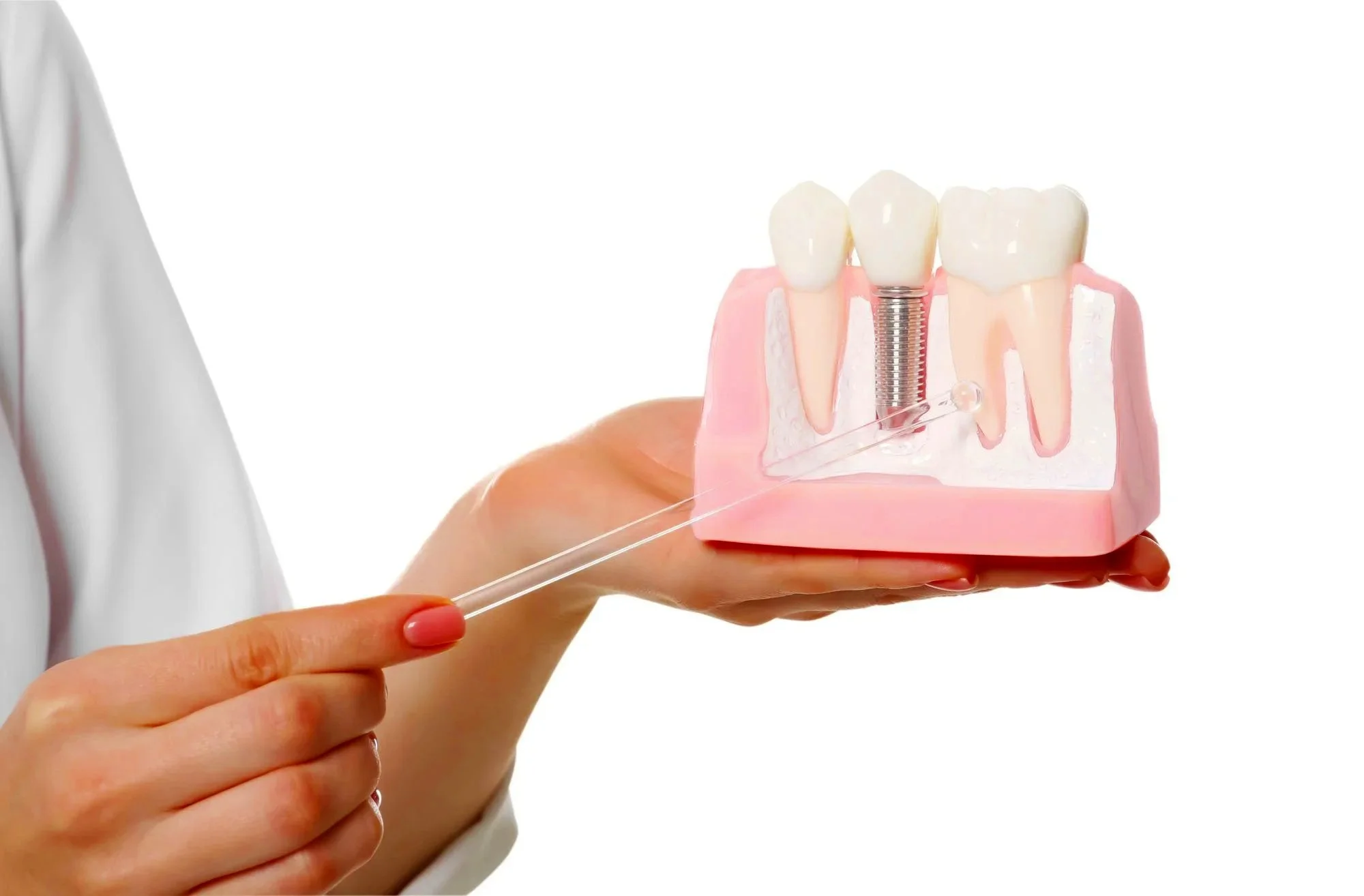
Dental implants are small titanium posts surgically placed into the jawbone to replace the roots of missing teeth.
Once the implant has integrated with the surrounding bone, it can support a dental crown, bridge or full-arch restoration.
Because implants are anchored directly into the jaw, they can provide a stable and natural-feeling replacement for missing teeth.
What Are Dentures?
Dentures are removable appliances designed to replace missing teeth and surrounding gum tissue.
Depending on your needs, you may require:
A partial denture for several missing teeth
A complete denture when all teeth in an arch are missing
Modern dentures can be comfortable and natural-looking and remain an appropriate option for many patients.
Dental Implants vs Dentures: The Main Differences
Stability
One of the biggest differences is stability.
Dentures rest on the gums and can sometimes move while eating or speaking. Dental implants are anchored into the jawbone, providing significantly greater stability.
Implant-supported dentures can combine the removable nature of dentures with the additional stability provided by implants.
Comfort
A well-fitting denture can be comfortable, but some patients experience pressure points, movement or irritation.
Because dental implants are fixed in place, they generally feel more like natural teeth.
However, suitability depends on your individual oral health and treatment plan.
Eating and Chewing
Dentures can restore much of your chewing function, but some foods may remain difficult to eat.
Implant-supported teeth provide greater stability and can allow patients to eat a wider range of foods with greater confidence.
Jawbone Preservation
This is an important difference.
When a natural tooth is lost, the surrounding jawbone gradually resorbs because the tooth root is no longer providing stimulation.
Traditional dentures do not replace the tooth root, so bone loss can continue.
Dental implants replace the root component and can help preserve the bone surrounding the implant.
How Long Do They Last?
The lifespan of both dentures and dental implants varies depending on individual circumstances and maintenance.
Dentures may need adjustment, relining or replacement over time as the shape of the gums and jaw changes.
Dental implants are designed as a long-term tooth replacement solution. The implant itself can remain functional for many years when properly cared for, although the visible crown or other restoration may eventually require replacement.
Regular dental care is important for both options.
Are Dental Implants More Expensive?
Dental implants generally involve a greater initial investment than traditional dentures.
However, cost should be considered alongside:
Expected longevity
Maintenance requirements
Comfort
Function
Number of teeth being replaced
Need for additional procedures such as bone grafting
The most affordable option initially is not necessarily the most suitable long-term solution.
Your oral surgeon can explain the expected treatment stages and associated costs during your consultation.
Can I Have Implants If I've Had Dentures for Years?
Yes.
Patients who have worn dentures for many years may still be suitable for implant treatment.
However, long-term tooth loss can result in significant bone resorption. If there is insufficient bone available, additional procedures such as bone grafting may be recommended before implants can be placed.
A 3D CBCT scan can help assess the available bone and determine the most appropriate approach.
What About Implant-Supported Dentures?
You don't necessarily have to choose between conventional dentures and individual fixed implants.
Implant-supported dentures use dental implants to provide additional support and stability.
This can reduce movement and improve confidence while eating and speaking.
Depending on your individual circumstances, an implant-supported solution may be removable or fixed.
Which Option Is Right for Me?
There is no single solution that is right for everyone.
Dentures may be appropriate if:
You need to replace many teeth.
You prefer a removable option.
Implant treatment is not suitable.
You want a simpler initial treatment.
Dental implants may be suitable if:
You want a fixed tooth replacement.
You have adequate bone or are suitable for bone grafting.
You want to avoid removable dentures.
Long-term stability is a priority.
Your oral surgeon can assess your oral health, bone volume and treatment goals before recommending an option.
Replacing Missing Teeth in Wagga Wagga
If you're considering dentures, dental implants or an implant-supported solution, the team at Wagga IV provides specialist assessment for patients throughout Wagga Wagga, the Riverina and regional NSW.
Our oral surgeons use modern diagnostic imaging to evaluate your teeth, gums and jawbone before developing a personalised treatment plan.
Book a Consultation at Wagga IV
If you're living with missing teeth and are unsure which replacement option is right for you, a specialist assessment can help you understand your choices.
The experienced oral surgeons at Wagga IV can discuss dental implants, bone grafting and other tooth replacement solutions based on your individual needs.
Contact Wagga IV to arrange a consultation in Wagga Wagga and explore your options for restoring comfortable, confident function.